
Last Updated: October 25, 2026
Quick Summary
To upgrade small living spaces, start by arranging furniture strategically to guide traffic flow and create depth, then choose scaled multifunctional pieces with exposed legs that maximize floor space. Combine vertical storage, layered lighting, light colors, and mirrors to make compact rooms feel larger and more open.
- Position furniture away from walls and keep at least 18 inches of walking space between major furniture items
- Choose furniture on legs rather than skirted bases to create the illusion of more floor space
- Use vertical storage like floating shelves and wall-mounted organizers to maximize unused wall space
- Layer multiple light sources at different heights and place mirrors opposite windows to reflect natural light
- Paint walls in light, neutral colors like off-white, soft gray, or pale blue to reflect light and create an airy feeling
Table of Contents
- 1. Master Your Small Living Room Layout
- 2. Choose Scaled Furniture and Multifunctional Pieces
- 3. Implement Small Living Room Storage Ideas
- 4. Optimize Small Living Room Lighting Ideas
- 5. Select Small Living Room Color Ideas That Expand Space
- 6. Use Mirrors and Visual Tricks to Create Openness
- 7. Layer Textures, Patterns, and Decor Without Clutter
- 8. Prioritize Rental-Friendly and Reversible Upgrades
- Frequently Asked Questions
1. Master Your Small Living Room Layout
The foundation of any successful approach to upgrade small living spaces starts with how you arrange your furniture. Before you buy anything new, map out what you have and where it goes. A smart layout makes the room feel larger and more functional.
Start by measuring your space and identifying traffic flow. Where do people naturally walk? Your furniture should guide them, not block them. Leave clear pathways from the door to other areas. This simple move instantly makes a room feel more open.
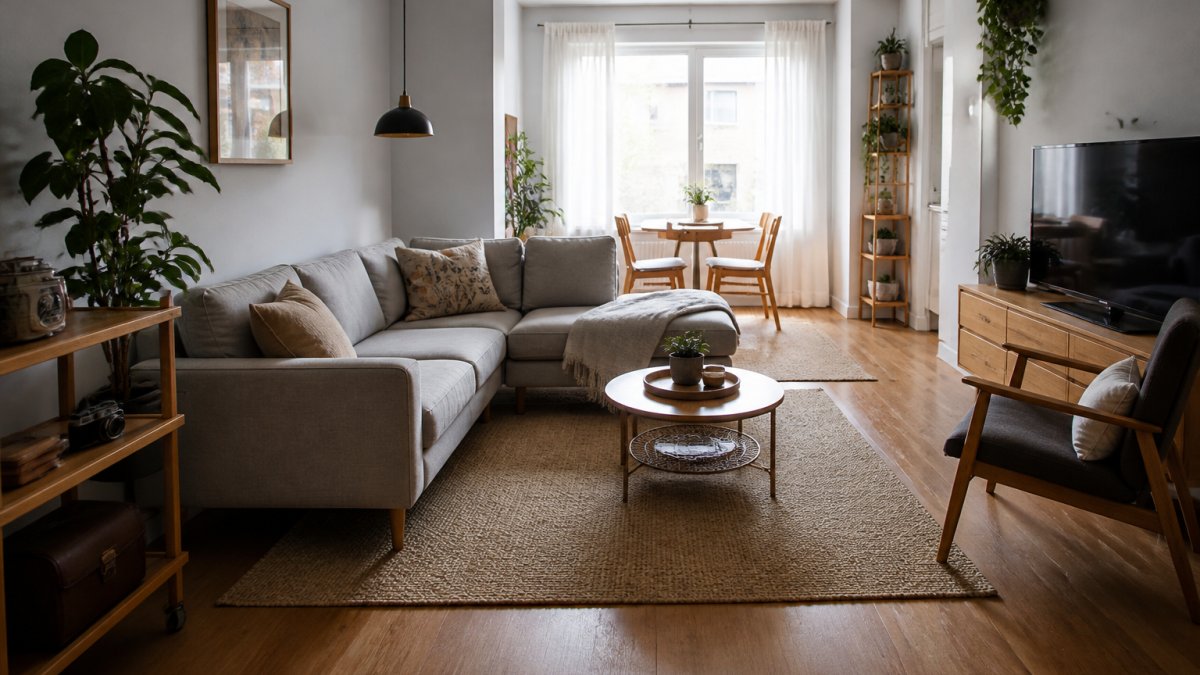
Consider the focal point of your room. This might be a window, TV, or fireplace. Arrange seating to face this focal point. Everything else flows from there. A centered focal point creates balance and makes the space feel intentional, not cramped.
Key layout principles:
- Position furniture away from walls to create depth
- Use corner spaces for storage or accent pieces
- Keep at least 18 inches of walking space between major furniture items
- Angle furniture slightly to soften hard corners and add visual interest
2. Choose Scaled Furniture and Multifunctional Pieces
Small spaces demand furniture that fits the scale of the room. Oversized sofas and bulky chairs overwhelm compact areas. Instead, look for pieces with exposed legs, which create visual lightness and make rooms feel airier.
Multifunctional furniture solves two problems at once:
- Ottoman with hidden storage for blankets and magazines
- Coffee table that lifts up for dining or work
- Sofa bed for guests without needing a separate bedroom
- Wall-mounted desk that folds away when not in use
Sectionals work well in small living rooms when they fit the corner properly. A compact L-shaped sectional uses corner space efficiently and provides more seating than a traditional sofa. Measure twice before ordering to ensure it actually fits through your door and in your space.
Look for furniture on legs rather than skirted bases. Legs create the illusion of more floor space beneath. This visual trick makes even a small room feel more open and less cluttered.
3. Implement Small Living Room Storage Ideas
Storage is the secret weapon of small space living. When clutter is hidden, your room automatically feels bigger. Vertical storage is your best friend here because it pulls your eye upward and maximizes unused wall space.
Smart storage solutions for compact spaces:
- Floating shelves above furniture for books and decor
- Built-in cabinets that blend with walls
- Under-seat storage in ottomans and benches
- Wall-mounted organizers for remote controls and small items
The Floating Iron Ribbon Wine Rack - Wall Mounted Holder for 5 Bottles demonstrates how vertical storage saves floor space while adding style. This piece holds items you'd otherwise stack on a table, freeing up surface area for other uses. Wall-mounted storage works especially well in rental spaces because it doesn't require permanent installation.
Corner shelving units fit awkward spaces that would otherwise go unused. A tall, narrow bookcase in the corner holds far more than a low storage bench taking up floor real estate. Think vertical first, horizontal second.
Baskets and bins on shelves keep items organized and contained. Open shelving can look chaotic if items aren't grouped thoughtfully. Matching containers create visual calm even when the shelves are full.
4. Optimize Small Living Room Lighting Ideas
Light transforms how a space feels. Bright, layered lighting makes small rooms feel larger and more welcoming. Avoid relying on one overhead fixture. Instead, combine multiple light sources at different heights.
Natural light is your strongest tool. Maximize it by keeping windows clear of heavy drapes. Sheer curtains let light through while maintaining privacy. If you have limited natural light, mirrors opposite windows bounce light around the room.
Lighting layers to create depth:
- Overhead fixture for general brightness
- Table lamps on side tables for warmth
- Wall sconces to save table space
- Floor lamp in a corner to brighten dark areas
The Wireless Motion Sensor Light offers practical illumination without taking up surface space. Motion-activated lights work well in entryways, bathrooms, or reading nooks where you need light on demand. This type of fixture adds function while keeping your surfaces clear.
Pendant lights hung from the ceiling draw the eye upward, making ceilings feel higher. You can also explore decorative lighting options that create ambiance while saving space. They work especially well over small dining areas or work zones. Dimmable bulbs let you adjust the mood from bright and energetic to cozy and relaxed.
5. Select Small Living Room Color Ideas That Expand Space
Color psychology matters in small spaces. Light, neutral colors reflect light and create an airy feeling. Darker colors absorb light and can make compact rooms feel smaller and more enclosed.
Colors that expand small spaces:
- Off-white and cream for maximum light reflection
- Soft grays and pale blues for calm sophistication
- Warm beiges that feel inviting without heaviness
- Pale greens for a nature-inspired, open feeling
Paint is one of the most affordable ways to upgrade small living spaces you can make. A fresh coat of light paint costs far less than new furniture but transforms how the space feels. Consider painting just one accent wall in a slightly deeper shade to add depth without overwhelming the room.
Avoid bold, saturated colors on large surfaces. Save dramatic colors for small accents like pillows, artwork, or a single chair. This approach gives you personality without visual chaos.
Floating Iron Ribbon Wine Rack – Wall Mounted Holder for 5 Bottles →
Light-colored flooring also expands space. If you can't replace flooring, light-colored area rugs create the same effect. A rug that runs wall-to-wall visually enlarges the room, while a small rug makes it feel smaller.
Light colors create an airy feeling in small rooms, while darker shades can make spaces feel cramped.
| Color | Effect | Best Use |
|---|---|---|
| Off-white and cream | Maximum light reflection | Walls and large surfaces |
| Soft grays and pale blues | Calm sophistication | Main color scheme |
| Warm beiges | Inviting without heaviness | Walls and furniture |
| Pale greens | Nature-inspired, open feeling | Accent walls or decor |
6. Use Mirrors and Visual Tricks to Create Openness
Mirrors are the single most effective tool for making small spaces feel larger. They reflect light and create the illusion of depth. Place a mirror opposite a window to bounce natural light around the room.
Large mirrors work better than small ones. A floor-to-ceiling mirror or a wide horizontal mirror above a console table creates significant visual expansion. Avoid tiny mirrors that just reflect clutter back at you.
Visual tricks that expand small spaces:
- Hang artwork higher on walls to draw eyes upward
- Use curtain rods that extend beyond the window frame
- Choose glass or lucite furniture for visual lightness
- Display items on shelves rather than in closed cabinets
Reflective surfaces beyond mirrors also help. Glossy paint finishes, metallic accents, and glass tabletops all bounce light and create a sense of openness. Matte finishes absorb light and can make spaces feel heavier.
Negative space is powerful. Don't fill every inch of wall or shelf. Empty space actually makes a room feel larger and more sophisticated than a completely decorated one.
7. Layer Textures, Patterns, and Decor Without Clutter
Visual interest comes from mixing textures and patterns, but balance is crucial. Too many patterns create chaos. Too few make the space feel boring and sterile.
Start with a base of solid colors, then add texture through fabrics. A linen sofa with a wool throw, cotton pillows, and a silk accent pillow creates richness without visual noise. Different textures catch light differently, adding depth to the space.
Patterns work best when they're limited to 2-3 per room. Choose one dominant pattern for a large surface like a rug or curtains, then add smaller patterns in pillows or artwork. Keep patterns in a similar color family to avoid visual chaos.
The Mini Resin Animal Figurines DIY Micro Landscape Decor shows how small-scale decorative elements add personality without overwhelming compact spaces. Tiny figurines grouped on a shelf create visual interest without taking up much space.
Layering strategy for small spaces:
- Start with solid base colors on walls and large furniture
- Add one textured fabric element like a throw or rug
- Include one patterned piece like pillows or artwork
- Finish with small decor items grouped intentionally
Decor should serve a purpose or bring you joy. Avoid filling shelves with items you don't love. One beautiful plant or meaningful object displayed well beats a shelf full of random items.
8. Prioritize Rental-Friendly and Reversible Upgrades
If you rent, permanent changes aren't an option. Focus on upgrades you can take with you or remove without damage. These reversible changes still transform your space.
Removable wallpaper adds pattern and color without damaging walls. It peels off cleanly when you move. Peel-and-stick tiles can refresh a bathroom or kitchen backsplash temporarily.
The Nano Tape Double Sided Tape Transparent lets you hang artwork, shelves, and decor without nails or holes. This adhesive works on most surfaces and removes cleanly.
Reversible upgrades that make an impact:
- Removable wallpaper or wall decals
- Adhesive hooks and shelves
- Portable storage units instead of built-ins
- Throw rugs to define spaces
- Curtain rods that clamp to walls
- Freestanding room dividers
Furniture arrangement costs nothing and makes a huge difference. Rearranging what you have gives you a fresh perspective and often reveals better configurations. Move pieces around seasonally to keep the space feeling new.
Focus your budget on items you'll take with you. Quality throw pillows, a beautiful rug, and good lighting work in any space you move to.
Upgrading a small living space doesn't require major renovations or a huge budget. The right layout, smart furniture choices, and thoughtful decor create a room that feels open, functional, and genuinely yours.
Frequently Asked Questions
How can I upgrade small living spaces without spending a fortune?
Start with reversible, rental-friendly upgrades: reposition furniture to improve traffic flow, add mirrors to amplify light, and use double-sided nano tape to hang decor without damaging walls. Layer textures with affordable rugs and throw pillows. Multifunctional pieces like storage ottomans replace two items in one. Prioritize upgrades by impact, better lighting and decluttering cost little but transform the room significantly. Add statement pieces gradually as your budget allows.
What is the best small living room layout for entertaining?
Arrange seating in a conversation circle rather than facing a TV. Use a compact sectional with exposed legs to maintain visual flow and create circulation space. Position the focal point (fireplace, artwork, or accent wall) to draw the eye without consuming floor space. Keep the center of the room open for movement. A round or oval coffee table works better than rectangular ones in tight spaces, and floating furniture away from walls makes the room feel larger while maintaining functional seating for guests.
How do small living room storage ideas help reduce visual clutter?
Vertical storage, shelves, wall-mounted cabinets, and built-in units, keeps items off the floor and draws the eye upward, making ceilings feel higher. Closed storage (ottomans with hidden compartments, storage benches) hides clutter while serving dual purposes. Declutter ruthlessly first: remove items you don't use or love. Organize remaining items by category and store like things together. Open shelving works only if styled minimally; too many visible items create chaos. Invest in storage solutions that match your decor style so they enhance rather than detract from the space.
Can I upgrade a small living space if I rent?
Yes. Use reversible upgrades: removable wallpaper, peel-and-stick decals, and double-sided nano tape (like our Nano Tape Double Sided Tape Transparent) to hang artwork and mirrors without damaging walls. Rearrange furniture to improve layout and flow. Add layered lighting with floor lamps and table lamps instead of relying solely on overhead fixtures. Use area rugs to define zones. Paint accent walls if your lease allows, or use fabric panels. Multifunctional, portable furniture (storage ottomans, nesting tables) can move with you. These changes cost little and leave no permanent marks.
