
Last Updated: November 2, 2026
Quick Summary
The most useful meal prep gadgets are the ones that match the tasks you repeat each week, starting with chopping, measuring and storage. A vegetable chopper speeds up vegetable prep, a food processor pays off for larger batches, and a digital scale keeps portions consistent.
- Start with the few tasks you repeat weekly: chopping, measuring, portioning and storing.
- A Vegetable Chopper Kitchen costs $13.08 and handles chopping, dicing and slicing.
- A food processor saves the most time when you make sauces, hummus or large batches of vegetables.
- Check digital scales every few months with a known weight, and store them flat.
- Glass containers with silicone-gasket lids handle soups and saucy dishes without leaking.
Table of Contents
- Why the Right Gadgets Matter More Than the Most Gadgets
- The Core Tools Every Meal Prepper Needs
- A Vegetable Chopper for Meal Prep: Speed Without the Knife Work
- Food Processor for Meal Prep: When Bulk Chopping Pays Off
- Measuring Tools That Keep Portions Consistent
- Meal Prep Containers and Storage That Keep Food Fresh
- Building Your Meal Prep Kit Around Your Kitchen Space
- Frequently Asked Questions
Why the Right Gadgets Matter More Than the Most Gadgets
Meal prep gadgets save time only when the tools in your kitchen match the way you actually cook. At Stuff & Such Market, we curate the small set of kitchen tools that earn their place on the counter, not a long list of novelties.
Most gadget lists pile up dozens of items. A better approach is to start with the handful of tasks you repeat every week: chopping, measuring, portioning and storing. Get those right, and the rest of your kitchen can stay simple.
The Core Tools Every Meal Prepper Needs
A small core kit covers most weekly prep. Sharp knives, large cutting boards and sheet pans are often more useful than complex gadgets.
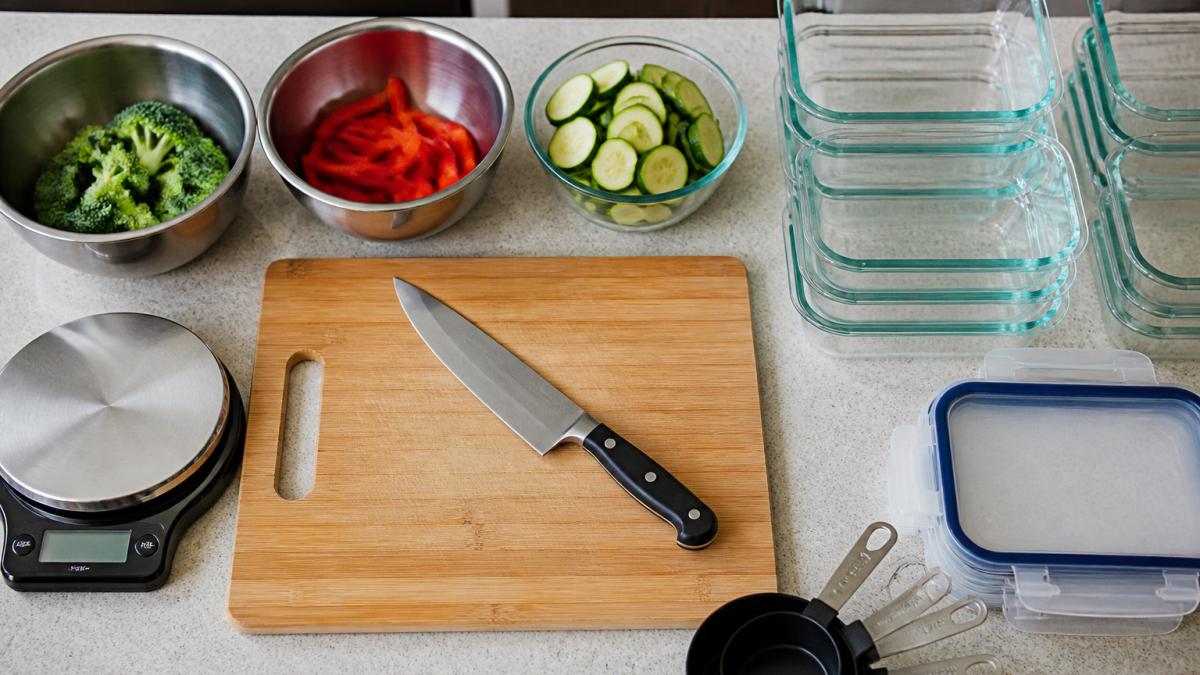
Start with the basics, then add a single specialized tool only when a task clearly slows you down. Our listed meal prep gadgets help with the repetitive parts of the job.
A Vegetable Chopper for Meal Prep: Speed Without the Knife Work
If chopping onions, peppers and carrots eats up your prep session, a vegetable chopper can cut that time sharply. You can browse the Vegetable Chopper Kitchen to see its chopping, dicing and slicing options. Our Vegetable Chopper Kitchen handles chopping, dicing and slicing, which makes it useful for salad bases and other vegetable prep.

It is designed for precise, uniform cuts. At $13.08, it is an accessible option for anyone who preps several meals a week.
The article's key vegetable chopper facts at a glance:
| Item | Value | Note |
|---|---|---|
| Vegetable Chopper Kitchen | $13.08 | Handles chopping, dicing and slicing |
| Best for | Several meals a week | Speeds up onions, peppers and carrots |
| Cut quality | Uniform | Designed for precise, uniform cuts |
Food Processor for Meal Prep: When Bulk Chopping Pays Off
A food processor earns its counter space when you make sauces, hummus, pesto or large quantities of diced vegetables. A processor is one of the strongest examples of a time-saving prep tool.
For smaller weekly batches, a manual chopper may be enough. For larger sessions, the processor saves the most time. Decide based on how much you cook at once, not on what looks impressive.
Measuring Tools That Keep Portions Consistent
Consistent portions are the whole point of meal prep, and the tools that get you there fall into three jobs: weighing, volume measuring, and portioning into containers. Most guides stop at "buy a scale." The useful distinction is which measuring tool solves which job, and which ones stay accurate after months of weekly use.
Digital scales: the accuracy anchor. A digital kitchen scale is useful for weighing dry ingredients and liquids when portioning meals.

Volume measuring: still necessary for some jobs. Scales are more accurate for solids, but volume measures remain faster for liquids, oils, and small amounts of spices. A nested set of stainless measuring cups and spoons with engraved (not printed) markings survives dishwasher cycles without fading. Angled measuring cups let you read the level from above, which is a small but real time-saver during batch cooking.
Portioning tools: the step most guides skip.
Accessibility angle: measuring tools for limited grip and low vision. This is where most meal-prep guides fall silent. If you have arthritis, limited hand strength, or low vision, the standard scale and measuring cup set can be frustrating. Favor scales with large backlit LCD digits and tactile buttons rather than flat touch panels, measuring cups with high-contrast markings and easy-grip handles, and scoop-style portioners that let you transfer food with a squeeze rather than a wrist twist. A scale with a hold function is also useful when the display is hard to read while pouring. These are not niche luxuries, they are the difference between measuring every week and giving up on portioning altogether.
Calibration and care. Even good scales drift. A common pattern is to check accuracy with a known weight, a 500-gram bag of flour or a calibration weight, every few months, and to store the scale flat rather than on its side. Wash measuring cups by hand if the markings are printed rather than engraved.
Meal Prep Containers and Storage That Keep Food Fresh
Storage is where meal prep succeeds or fails quietly. The right container keeps food safe, visible, and easy to grab; the wrong one leaks in a bag, stains, or hides leftovers until they spoil. Rather than a single recommendation, it helps to match the material to the job.
Glass containers: the default for most weekly prep. Glass does not hold stains or odors, tolerates freezer-to-oven transitions (check the manufacturer's temperature limits), and lets you see what is inside without opening the lid. The trade-offs are weight and breakage risk, plus the fact that glass takes longer to heat evenly in a microwave. Stackable, leak-proof glass sets with clip or snap lids are the most common recommendation for a reason: they handle soups, stews, and saucy dishes without leaking. Look for lids with a silicone gasket and at least four locking tabs, and check that the containers nest when empty.
Silicone and collapsible containers: the space-savers. Collapsible silicone containers compress flat when empty, which makes them useful for small kitchens and for packing lunches. They are lightweight and freezer-safe, but they can absorb strong odors over time and are less rigid, so they are better for dry goods, snacks, and leftovers than for liquids in a bag.
Beeswax wraps and breathable covers: the sustainability angle. This is the comparison most meal-prep guides skip. For bread and baked goods specifically, our Cotton Linen Bread Bag is a reusable alternative to plastic bags.
Material comparison at a glance. Glass: best for leak-proof, stain-resistant, oven-safe storage; heavier and breakable. Silicone: best for collapsible, lightweight, freezer-friendly storage; can retain odors. Beeswax and breathable fabric: best for dry goods, bread, and produce; not airtight and requires gentle care. Stainless steel: durable and non-reactive, but not microwave-safe and often opaque.
Practical freshness habits. Label containers with contents and date, cool food before sealing to reduce condensation, and leave headspace for expansion in the freezer. Wide-mouth mason jars are a common choice for overnight oats, salads in layers, and bulk grains because they are cheap, stackable, and easy to see into.
Building Your Meal Prep Kit Around Your Kitchen Space
Your kit should fit your kitchen, not the other way around. Smaller spaces benefit from tools that store flat, nest or detach, while larger kitchens can handle a full processor and multiple containers.
Our Heat Guard Kitchen Drainage Basket is a useful example. It measures 9.2 x 7.6 x 4.9 inches and can be used to rinse produce, drain pasta and serve as a salad container. Build your kit one tool at a time, starting with the task that costs you the most time each week.

Frequently Asked Questions
What kitchen gadgets are best for meal prep?
The most useful tools for meal prep are a sharp knife, a large cutting board, a digital kitchen scale, a vegetable chopper and sturdy storage containers. A digital kitchen scale makes portioning consistent. Start with the tools that cut your weekly prep time most, then add specialty items only if your routine calls for them. Many experienced preppers say basic, well-made tools outperform complicated gadgets.
What tools make meal prep faster?
A vegetable chopper or food processor removes the most time-consuming step: cutting. A chopper handles onions, peppers and carrots in seconds, while a food processor works well for shredding cabbage or grating cheese in larger batches. A digital scale saves time too, because you portion ingredients once instead of measuring each serving. Pairing these tools with stackable containers lets you move from prep to storage without extra steps.
Are food processors worth it for meal prep?
A food processor is worth buying if you prepare large batches of chopped vegetables, sauces or dips each week. It handles volume that a hand chopper cannot, and it works well for shredding and pureeing. If you prep only two or three meals a week with a small amount of produce, a vegetable chopper or sharp knife may be enough. Consider your counter space and how often you will actually use the machine before buying.
What containers are best for meal prep?
Stackable, leak-proof glass containers are the most recommended option for weekly meal prep, because they keep food fresh and reheat well. Wide-mouth mason jars suit salads, overnight oats and soups. Look for lids that seal tightly and containers that stack neatly in your fridge. Stuff & Such Market's Cotton Linen Bread Bag, priced from $12.42, is a useful option for keeping bread fresh alongside your other prepped staples.
Ready to stock your prep station? Browse the full kitchen range at Stuff & Such Market and pick the tools that match how you cook. Free shipping applies to all orders.
